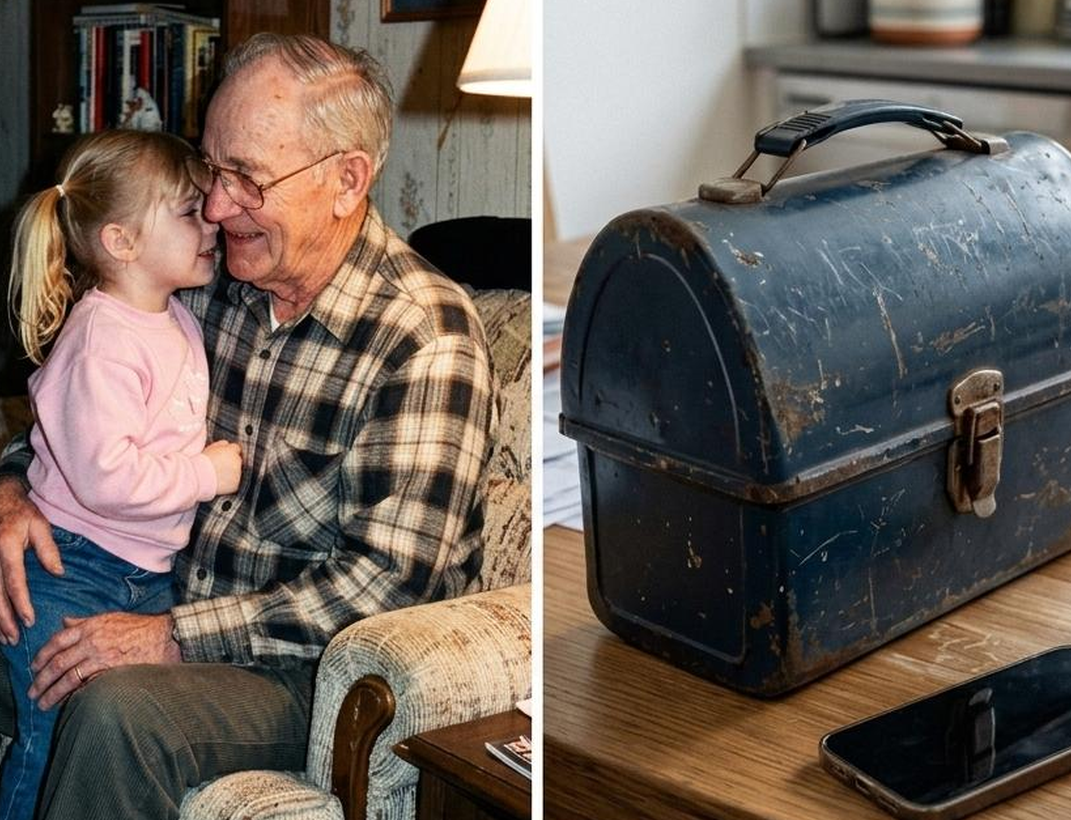
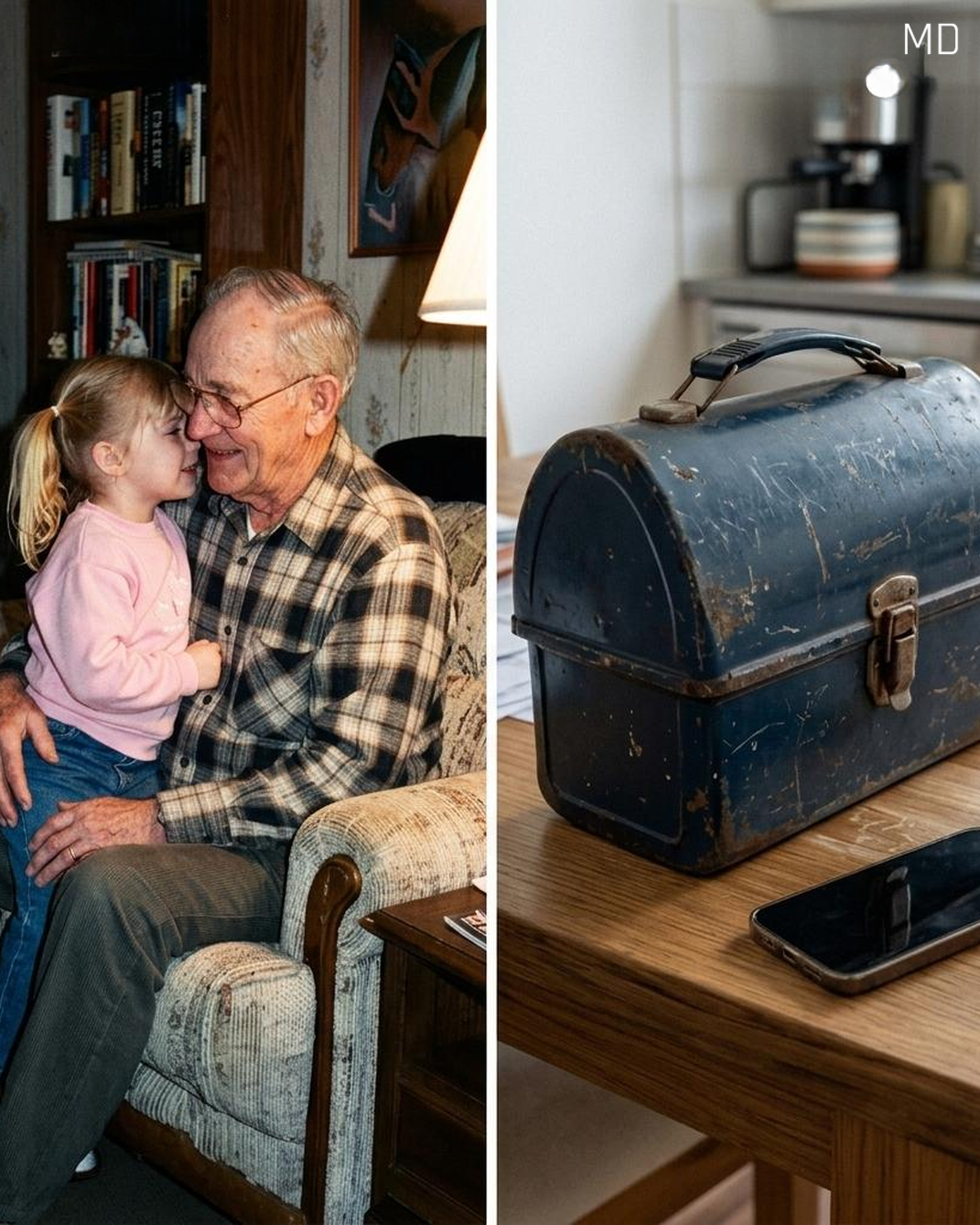
When my grandfather passed away, I believed I understood my place in the family: the quiet one, the overlooked one, the youngest grandchild who stayed while everyone else moved on. He had raised my siblings and me after our parents died, and though my brothers and sister eventually left to build lives of their own, I remained behind to care for him in his final years. So when the will was read and my siblings inherited the house, the car, and cash, I braced myself for disappointment. But nothing prepared me for the moment the attorney looked at me and said, “To Angelica, your grandfather leaves his personal lunchbox.” My siblings laughed openly as I stood there humiliated, clutching the old metal lunchbox Grandpa had carried to work every day.
I left the office in tears and wandered to the park where Grandpa had once taken me as a child. Sitting on a bench, I stared at the lunchbox and wondered if this had all been some final misunderstanding. But when I opened it, I found not food or keepsakes, but stacks of old receipts and a notebook. At first they looked meaningless—until I noticed that each receipt had a single number circled. Curious, I began organizing them, and after hours of sorting, I realized the numbers formed coordinates. My grandfather had left me one final treasure hunt. It was exactly the sort of game he used to create for me when I was little, only now the clues stretched across the city. For the first time since the funeral, I smiled through my tears. I knew Grandpa had left me something more than a lunchbox—he had left me a message.
The clues led me from one place to another: an auto shop, a diner, a library, and an office where people who had known my grandfather for years handed me envelopes, records, and pieces of a story I had never been told. Slowly, the truth came together. My grandfather had quietly built investments and purchased properties over many years, carefully managing his money while appearing to live modestly. I also learned something else—my siblings had repeatedly gone to him for financial help over the years, and he had always given it. They had received support long before the will was ever read. But I had never asked for anything. I had stayed because I loved him, not because I expected a reward.
The final clue brought me to a safe-deposit box at the bank. Inside were property deeds, savings documents, and records showing that my grandfather had left me the ownership of several rental properties and significant financial assets—far more than my siblings had inherited combined. At the bottom lay one final handwritten note: “You stayed when leaving was easier. This was never about fairness. It was about trust.” I sat there holding his letter, tears falling freely, finally understanding the lesson he had spent his life teaching me. My grandfather had not left me less—he had left me the greatest gift of all: proof that quiet loyalty, compassion, and love are always seen, even when no one says so. The lunchbox I once thought was worthless became the symbol of everything he believed I deserved.